They say black soldiers couldn't fight in World War II
They say black soldiers couldn't fight in World War II. That when things got tough, they'd break and run. That's what the history books told you. That's what the generals wrote in their reports.
But there's a story they buried so deep, it took 70 years to dig up the truth. Picture this nightmare. You're a black soldier in 1944. You've trained for months with broken equipment while white units got the new gear.
Your own commanding general thinks you're inferior before you even see combat. Your ship to Italy to fight seasoned German troops in mountain terrain so brutal it breaks veteran white divisions. And when you succeed, they bury the story. When you fail, they scream it from every headline.
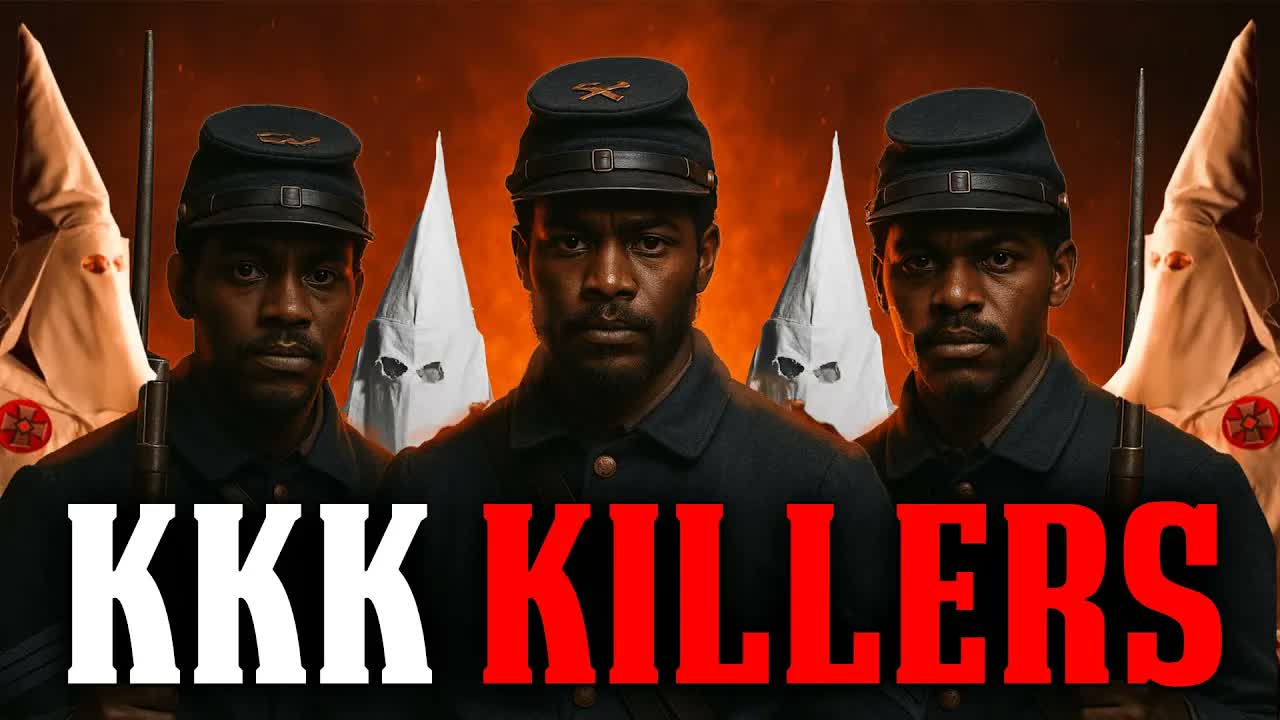
Welcome to the 92nd Infantry Division, the Buffalo Soldiers of World War II. These men weren't just fighting Germans. They were fighting a war on two fronts. Every German bunker they overran was also a blow against the racist generals in their own army.
Every town they liberated proved wrong the bigots back home. Every day they survived was evidence against the lie that black men couldn't fight, couldn't lead, couldn't endure. The real enemy wasn't just wearing German uniforms. It was wearing American ones, too.
By the end of this story, you'll understand how these soldiers didn't just defeat fascists abroad. They dismantled the racist myth that said they couldn't win at all. August 1944, the docks of Naples, Italy. Thousands of black soldiers step off transport ships into one of the most brutal theaters of World War II.
The 92nd Infantry Division has finally arrived for combat. These men have been training for 2 years, watching white divisions ship out while they stayed behind. But their commanding general, Edward Almond, is already writing their orbituary before they fire a single shot. Almond believes black soldiers are naturally cowardly.
He said it in meetings. He's written it in memos. In his mind, these men are destined to fail. And here's the sick genius of it all.
He's going to make sure they do. then blame it on their race when it happens. The perfect racist setup. Predict failure, cause failure, then point to the failure as proof you were right all along.
The 92nd gets assigned to the Sergio Valley
The 92nd gets assigned to the Sergio Valley. Mountains everywhere. German defenders dug into positions they've had months to perfect. This is terrain so difficult that white veteran divisions have already struggled here.
"While Almond is writing report after report about black cowardice, he's ignoring his own failures as a commander."
The Germans aren't just any enemy either. These are experienced troops who've been fighting for years and they know every ridge, every valley, every killing field. If you wanted to set up a black unit to fail, you couldn't pick a worse place to do it. But something Almond didn't expect starts happening immediately.
The men of the 92nd begin taking ground. In September 1944, elements of the division capture their first objectives, small towns, German positions. They're doing exactly what infantry divisions are supposed to do. But when Alman files his reports back to headquarters, these victories barely get mentioned.
Success doesn't fit his narrative, so success gets buried. If you want more hidden stories like this, subscribe to Black Stories Untold. Now, back to what happened next. The 92nd keeps fighting through the fall of 1944.
They're advancing slowly like every other unit in Italy's mountain hell. But they're advancing. German prisoners are getting captured. Towns are getting liberated.
The 370th Infantry Regiment, in particular, is performing exactly like a competent fighting unit should. They're proving wrong every racist assumption about black combat soldiers. And that's when the system decides to destroy them. December 26th, 1944, the Germans launch a surprise counterattack in the Serio Valley.
It's brutal and sudden, hitting the 366th Infantry Regiment with overwhelming force. In the chaos and confusion, parts of the regiment fall back in disorder. Some positions get overrun. It's exactly the kind of tactical setback that happens to every division in every war.
White units have retreated under similar circumstances throughout the Italian campaign. But when it happens to black soldiers, it becomes something different. It becomes racial evidence. Almond seizes on this moment like it's Christmas morning.
Black soldiers running from combat. Never mind that other elements of the division held their ground. Never mind that the retreat wasn't universal. Never mind that white units had similar breakdowns without anyone blaming their race.
The Sergio Valley incident becomes the story Almond has been waiting to tell.
✊ More Hidden Stories Like This
Subscribe to Black Stories Untold — weekly documented stories of Black resistance, genius, and survival they've spent generations trying to hide.
And he tells it loudly
And he tells it loudly. Here's where it gets darker. While Almond is writing report after report about black cowardice, he's ignoring his own failures as a commander. Bad intelligence, poor positioning, inadequate support, all the things that cause tactical failures in any army.
But instead of examining his leadership, he blames the soldier's skin color. It's the perfect scapegoat. The reports go up the chain of command. Negro troops prove unreliable under pressure.
Racial characteristics make them unsuitable for combat. The same lies that have been told about black soldiers since the Civil War now dressed up in official military language. And because the reports come from white generals, they're believed without question. The narrative is set.
The 92nd Infantry Division is a failure because black men can't fight. But the men of the 92nd keep fighting anyway. The final Allied offensive in Italy. While Almond is still writing his racist reports, his soldiers are proving him wrong on the battlefield.
The 92nd participates in breaking through the German Gothic line, the last major defensive position in northern Italy. They're taking prisoners. They're liberating towns. The 370th Infantry Regiment distinguishes itself repeatedly.
These aren't the actions of broken, cowardly troops. These are competent soldiers doing their job. Elements of the 92nd capture the towns of Masa and Kurara. They push German forces back toward the Po Valley.
They participate in operations that lead to the liberation of Genanoa. Every objective taken is another nail in the coffin of racial military theory. Every German position overrun proves black soldiers can fight just as effectively as anyone else. But you know what happens to these victories in Almond's reports?
success doesn't support his racist conclusions, so success gets erased. Keep watching because what comes next will blow your mind. The war in Italy ends in May 1945. The 92nd Infantry Division has served in sustained combat for 9 months.
They've advanced through some of the most difficult terrain in Europe. They've captured towns, taken prisoners, and contributed to Allied victory. By any reasonable measure, they've performed their mission. But that's not the story that gets told.
Here's the real crime that was committed against these men.
The post-war assessment of the 92nd Infantry Division become
The post-war assessment of the 92nd Infantry Division becomes official military history. And that assessment written by the same racist officers who sabotaged them declares the division a failure. Not because they failed, but because acknowledging their success would destroy the entire racist foundation of military segregation. The truth about the 92nd is buried under lies because the truth is too dangerous.
"Because if black soldiers could fight as effectively as white soldiers when given a fair chance, then what other racist assumptions were lies?"
Think about the mathematical evil of this system. Every black success had to be minimized or erased. Every black failure had to be magnified and racialized. Meanwhile, white units experiencing identical problems got different explanations.
When white soldiers retreated, it was tactical necessity. When black soldiers retreated, it was racial cowardice. When white units succeeded, it proved their superiority. When black units succeeded, it got forgotten.
The game was rigged from the start. But the full picture is even bigger than this. The 92nd Infantry Division wasn't just fighting a military war. They were fighting an ideological war.
Every day they stayed in the field was evidence against racist military theory. Every German position they captured was also a victory against American bigotry. Every town they liberated proved wrong the generations of lies about black military capability. These soldiers weren't just defeating fascists.
They were defeating the fascist ideas in their own country's army. The men of the 92nd came home to a segregated America that refused to acknowledge their service. The same country they'd risked their lives for still denied them basic civil rights. Many joined the growing civil rights movement, carrying with them the knowledge that they'd proven racist military theory wrong.
They'd fought and won against both German fascists and American racists. That experience, that confidence became part of the foundation for the freedom struggles of the 1950s and60s. And this is where everything connects. The systematic erasure of the 92 real record wasn't just about military history.
It was about controlling the narrative of black capability. Because if black soldiers could fight as effectively as white soldiers when given a fair chance, then what other racist assumptions were lies? If segregated units succeeded despite systematic sabotage, what could integrated units accomplish? The success of the 92nd Infantry Division was too dangerous to admit.
It threatened the entire structure of American racial hierar
It threatened the entire structure of American racial hierarchy. President Truman integrated the military in 1948, partly based on lessons learned from World War II. But by then, the false narrative about segregated units was already set. It took decades for historians to dig through the racist reports and uncover what really happened in those Italian mountains.
The truth was there all along, buried under generations of lies designed to protect the feelings of bigots who couldn't handle the reality of black military excellence. Here's what the 92nd Infantry Division really proved in World War II. They proved that when black soldiers were given adequate training, competent leadership, and fair treatment, they performed just as effectively as any other troops. They proved that racism, not race, was the real enemy of military effectiveness.
They proved that every failure blamed on black inferiority was actually caused by white supremacist sabotage. And most importantly, they proved that black excellence could survive and succeed even under conditions specifically designed to destroy it. The real victory of the 92nd wasn't just tactical, it was ideological. They didn't just help defeat Nazi Germany.
They helped defeat the Nazi ideas that infected their own military. Every German bunker they overran was also a blow against American racism. Every town they liberated was also a liberation from the lies that said black men couldn't fight, couldn't lead, couldn't win. Their success under impossible conditions didn't just contribute to Allied victory.
It contributed to the long march toward equality that would transform America itself. That's the story they tried to erase. The story of soldiers who fought two wars and won both. The story of men who proved that courage has no color, but cowardice does.
It's the color of the racism that tried to destroy them, failed, and then lied about what really happened. The Buffalo Soldiers of World War II didn't just serve their country. They saved it from its own worst lies about itself.