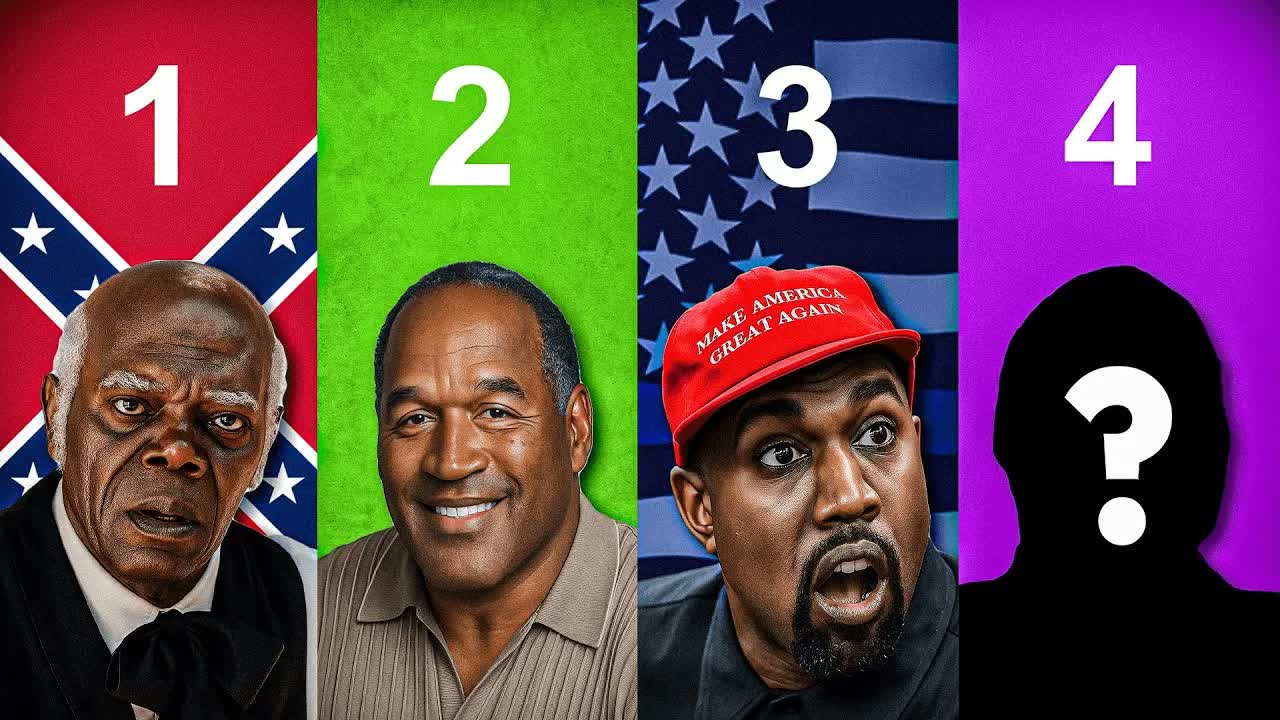
The four types of black ghetto explained
The four types of black ghetto explained. Number one, the young. This archetype believes danger equals dignity. It's the ski mask on live.
The crash out mentality. No plan, no elders, no tomorrow. He's not fighting a system. He's fighting anybody close enough to bleed.
When the 1980s crack era shattered fathers out of the home, boys learned the rules of manhood from the block, not a dad. Labels discovered that chaos sells. The more violent the lyric, the hotter the stream. And the more funerals, the bigger the mythology.
Social media gave every impulsive thought a camera, a beat, and an audience. Now we've got a whole generation that thinks being dangerous is the same as being a man. Talented brother, could really rap, had the streets buzzing. But his music wasn't just storytelling.
Every track was a body count. Every video a threat, every lyric a promise of violence. And when he passed outside an Atlanta hookah lounge at 26, shot in a confrontation that didn't have to happen. The internet turned it into content.
RIP shirts, murals, tribute songs, all treating his passing like it was destiny instead of tragedy. NBA Young Boy's been arrested multiple times, been in shootouts, lost friends to the same violence he raps about. But instead of seeing this as a warning, young brothers see it as authentication. Like you can't be real unless you're risking your life.
This costs us mothers burying sons like it's a seasonal chore. It costs us children raised on RIP shirts instead of report cards. It creates a community where masculinity means being feared, not respected. In the 1960s, boys in ties walked to church, eyes on their elders, learning to care a family name.
Today, boys sit in courtrooms, eyes on a judge, learning DOC numbers. If you're mad at me for saying this, ask yourself, who profits when black boys treat each other like targets? The labels make money, the prison system stays full, the media gets content, and we get funerals. Before we go to the next level, if you're learning something from this breakdown, hit that subscribe button and ring the bell for black stories untold.
Number two, the city girl. This archetype confuses exposure with empowerment, twerking as diplomacy, promiscuity as progress, get a bag as therapy. She's the billboard for everything that pays today and hurts tomorrow. She came from a media machine that found out controversy sells best when it's black and loud.
She was amplified by an algorithm that rewards the most outrageous clip, not the most honorable character. She thrives in a community that stopped protecting her image and started paying for it. She built a whole career off lyrics that would make a sailor blush, videos that leave nothing to imagination, and a persona that treats promiscuity like a personality. And the internet loves it.
Millions of streams, soldout shows, brand deals.
But what are we really celebrating?
But what are we really celebrating? A young black woman who's convinced that the fastest way to success is through explicit content and hypersensuality. The City Girls popularized this whole scam on a man mentality. Get a rich man, get his money, move on to the next one.
"The single mother struggling presented as a badge of honor instead of a situation we should be trying to prevent."
They turned relationships into transactions and called it empowerment. But empowerment isn't convincing yourself that using your body is the same as owning your destiny. Real power is having options beyond your physical appeal. Here's how it plays out.
Attention becomes currency. Babies become content. Commitment becomes corny. The baby mama reveals on Instagram live.
The single mother struggling presented as a badge of honor instead of a situation we should be trying to prevent. Little girls are learning to be sexy before they learn to be safe. Watching their favorite influencers turn every aspect of womanhood into performance. This costs us respect for black womanhood in our own eyes and the worlds.
It costs us stable homes because lust builds nothing and a ring isn't included with the streams. It costs us daughters who inherit insecurity and sons who inherit confusion about what a woman should be. In the 1960s, we had Kretta Scott King, Dorothy Height, church choirs, Sunday hats, and the quiet power of restraint. Women who commanded respect without demanding attention.
Today, we have thirst traps and stripper poles repackaged as freedom. But real freedom is the power to say no to a check that requires your dignity. Number three, the scammer or dope boy. This archetype is a two-headed monster.
One head is the seller. In the 80s, it was crack. Today, it's swipes, fake gurus, and whatever poison trends. The neighborhood becomes a marketplace where the only export is misery.
The other head is the user. Lean cups, pills, powder, whatever numbs. Pain plus boredom plus easy access equals self-destruction on loop. Factories closed, jobs left, schools failed, and hustle became the curriculum.
America never ran out of customers for our collapse. It just changed the packaging from vials to Visa numbers to viral courses. G Herbo, talented rapper with a real message in some of his music, got caught up in a million dollar fraud scheme, using stolen identities to fund private jets and designer shopping sprees. When it came out, some people defended it like it was just another hustle.
But that money came from real people's stolen identities. Real people's credit destroyed. That's hurting people who look like us. Then you've got TJX6 literally making songs that are tutorials for credit card fraud, not metaphors, not street tales.
Actual stepbystep instructions set to a beat. He's treating federal crimes like they're a Tik Tok trend. and young brothers are watching thinking this is the wave not realizing that fraud charges carry sentences longer than some violent offenses. On the other side, you've got the addiction epidemic.
✊ More Hidden Stories Like This
Subscribe to Black Stories Untold — weekly documented stories of Black resistance, genius, and survival they've spent generations trying to hide.
Future made mask off
Future made mask off and suddenly everybody's sipping lean like it's a lifestyle. Juicew World passed from an overdose. But we keep romanticizing the substance use, turning pill bottles into punchlines and addiction into aesthetics. This promises status without discipline.
Design a belt, not balance sheets. It offers relief without healing. You don't fix trauma, you sip it. And it costs us everything.
Try building a block when every hand is reaching for the same pocket. We turn funerals into fashion shows. Fast money doesn't build slow wealth. And the landlord still ain't us.
Black Wall Street and thousands of blackowned businesses were built on cooperation and craft. Barbers, tailor, teachers, pastors, print shops. They built things that lasted generations. Today's neighborhood influencers build nothing that lasts a season.
The seller and the user are cousins. One destroys the block, the other destroys his body. Either way, the community pays the bill. You've seen the scam packs.
borrowed money phone. I made six figures in six weeks. You've watched the mug shots turn into merch. The bodies turned into bars.
The free him hashtags like we're proud of cages. This is the marketplace we've accepted where authenticity is expensive and fraud is on sale. Number four, the buffoon. This archetype escapes the hood by embarrassing it.
He's loud, reckless, and cameratrained. He specializes in viral humiliation, public fights, nonsense rants, clownish stunts. He's not selling talent, he's selling a stereotype. He came from a media tradition older than television.
Make the black man a joke. Once it was blackface and minstal shows, now it's going live and ragebait content. And I mean that literally. He's offbeat on purpose.
Sounds like he's reading his rhymes for the first time, but he went viral because he's a walking circus. The face tattoos, the hair, the messy relationship drama broadcast for the world, the constant fights and confrontations. He's a reality show that happens to make music. Boon Gang built a whole career off doing the dumbest stuff possible on camera.
stealing from stores, starting fights, destroying property, all for views. Millions of people watched him crash out in real time, treating his self-destruction like it was entertainment. That's modern minstrel scene. Same show, different stage.
Algorithms reward extremes, and nothing's more extreme than performing your own downfall. Outrage clicks from people who hate you, plus guilty laughs from people who watch anyway equals a career. He becomes the global face of our culture to people who never meet us. When someone in another country thinks about black Americans, and all they've seen is these viral clowns.
What do you think they imagine? He drowns out the builder, the scholar, the father, the quiet strength that doesn't trend. He teaches the next generation that attention is achievement, that being laughed at is the same as being successful. Our elders used to tell us, "Don't act a fool in public.
Now fools headline festivals." You've watched timelines cele
Now fools headline festivals." You've watched timelines celebrate the wildest behavior. The content that turns self-destruction into entertainment, the influencers who build brands off chaos. Reality TV has trained us that dignity isn't the point. It's just bad content.
"The face tattoos, the hair, the messy relationship drama broadcast for the world, the constant fights and confrontations."
This isn't an accident. It's an industry that profits from our humiliation, and we're the ones hitting record. All four archetypes feel good in the moment. The Y-in feels powerful.
The city girl feels desired. The scammer and dope boy feel rich, or at least respected. The buffoon feels famous. Power, desire, money, attention.
That's the entire modern economy, and it buys souls wholesale. But here's what our grandparents knew. Feelings aren't a future. Discipline is, dignity is, family is, craft is, faith is.
Under Jim Crow, when everything was stacked against us, we still chose order over chaos, patience over panic, building over burning, we didn't have much, but we had standards, and standards gave us strength. Now, somebody will say, "Don't romanticize the past. There was poverty, colorism, messy churches, domestic drama. True, we've never been perfect, but look at the direction.
Our grandparents had less freedom and more pride. We have more freedom and less pride. Freedom without an ethic becomes decadence. That's what we're living in.
Permission with no purpose. The solution isn't to go back to Jim Crow. The solution is to recover the aura that made us unbreakable while we move forward with opportunity that makes us unstoppable. To the YN, you think fear means respect.
Fear is a tax you pay until a tougher man collects. Respect is what stays when the weapons are gone. Raise a child you won't bury. Sex sells because you're priceless.
Stop discounting yourself. Modesty isn't weakness, it's ownership. Trade attention for admiration and see which one lasts. To the scammer, dope boy, addict.
You're good at math and marketing. Use it for something your kids can inherit. If the game is so smart, why the play is broke at 40 or dead at 22? Open a legit book, then a legit business.
Every laugh costs your last name something. You can be funny without being a fool. You can be famous without being a failure to your people. If we're serious, we need four counter archetypes.
The builder, the opposite of the YN. He starts a trade, a team, or a program. For him, calm beats chaos every time. He understands that real power isn't in making people fear you.
It's in making them trust. He builds things that last beyond the next Instagram post or the next beef. He's the brother who opens the barber shop, starts the youth program, coaches the team, teaches the trade. When he walks through the neighborhood, people feel safer, not scared.
The lady, the opposite of the city girl. She embodies beauty with standards and self-respect as branding. She understands that mystery is more magnetic than exposure.
That what you withhold has more value than what you reveal
That what you withhold has more value than what you reveal. She's the woman who walks into a room and commands respect without saying a word. Not because of what she's wearing, but because of who she's being. She knows her worth isn't measured in likes, followers, or how many men want her.
It's measured in how she carries herself when nobody's watching. The producer, the opposite of the scammer and addict. He turns skills into clean paper and transforms pain into purpose, not pills. He's figured out that the same hustle that made him money in the streets can make him a fortune in the market legally.
He's the brother who turned his sales skills into a business, his street smarts into strategy, his network into net worth. And when the trauma hits, he doesn't reach for the bottle or the blunt. He reaches for therapy, for community, for healing that actually heals. The craftsman and scholar, the opposite of the buffoon.
They make excellence go viral through art, code, research, film, and policy. They understand that being smart isn't corny, that reading isn't white, that education isn't a betrayal of the culture, it's an elevation of it. They're the creators who put the same energy into their craft that others put into clout chasing. They're proof that you can be authentically black and brilliantly excellent at the same time.
If algorithms won't amplify them, we will share what helps, starve what harms. These four archetypes will always exist as long as there's money in our collapse. But we choose whether they are stars or strays. We refuse to celebrate the boy who kills his reflection.
We refuse to clap for the girl who sells her crown. We refuse to free a hustle that enslaves us. We refuse to laugh at a clown who makes the whole block look dumb. We reclaim men who protect instead of provoke.
We reclaim women who inspire instead of expose. We reclaim hustlers who build instead of bleed. We reclaim entertainers who elevate instead of embarrass. Because the enemy isn't just outside.
It's the algorithm in our heads. Every day we decide what to stream into our souls. Every day we vote with our attention for the world our children will inherit. Then add one pillar, a book, a budget, a mentor, a morning routine.
If a million of us do that for a year, you won't recognize our neighborhoods. Our grandparents built dignity under Jim Crow. We can build destiny under anything. If you felt this, subscribe to Black Stories Untold.
We tell the truths the culture avoids, and we do it because we love our people. Tell me in the comments, which archetype hurts us most where you live, and which counter archetype are you becoming? The revolution isn't fireworks, it's habits. Let's rebuild the aura on purpose.